 How-to
How to Build a Professional Trading Business Plan: A Step-by-Step Guide
Last Updated: November 6, 2026
Quick Summary
A trading business plan is a written document that sets out your trading goals, your method, your risk rules, and how you will measure progress. Writing one before you trade helps you define measurable targets, stick to clear entry and exit rules, and keep losses within limits you set in advance.
- Pair every profit target with a maximum loss you will accept.
- Write entry, exit and trade setup rules before the market opens.
- Track daily drawdown and maximum drawdown as separate limits.
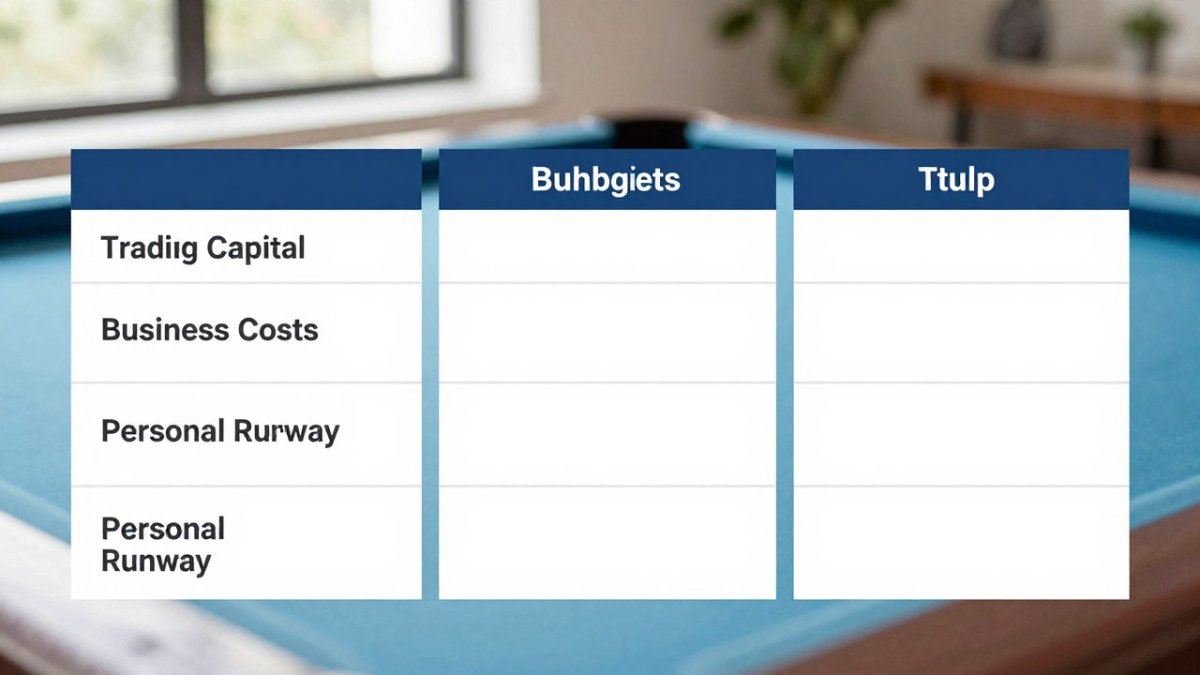
- Keep trading capital, operating costs and personal runway in separate pools.
- Validate your strategy with at least 30 to 50 forward-test trades before relying on it.
Table of Contents
- Step 1: Define Your Trading Goals and Business Objectives
- Step 2: Choose Your Trading Style, Markets and Methodology
- Step 3: Write Your Entry, Exit and Trade Setup Rules
- Step 4: Build a Trading Risk Management Plan
- Step 5: Plan Your Capital, Cash Flow and Personal Runway
- Step 6: Use a Trading Business Plan Template and Worked Example
- Step 7: Set Up a Trading Journal and Performance Tracking Routine
- Booking Your Evaluation: Putting Your Plan to the Test with Duncan Funded
- Frequently Asked Questions
Step 1: Define Your Trading Goals and Business Objectives
Writing a trading business plan starts with one question: what do you want this trading to do for you? A trading business plan is a written document that lays out your goals, your method, your risk rules, and how you will measure progress.
Start with specifics. Write down your income goal, your account size target, and the timeframe you have in mind. A goal like "make money trading" is too vague to test.
Next, separate your trading goals from your business objectives:
- Trading goals: Profit targets per month, win rate, and consistency
- Business objectives: Capital growth, reserves for expenses, and the number of funded accounts you want to manage
- Personal objectives: Hours per day you can commit, and what you need to stay disciplined
Watch out: Many traders set profit goals without a loss limit. Always pair a profit target with a maximum loss you will accept.
Step 2: Choose Your Trading Style, Markets and Methodology
Your trading style decides how often you trade and how long you hold positions. Common styles include scalping, day trading, swing trading, and position trading.
Pick markets you understand. Duncan Funded's simulated evaluations cover Forex, Futures, Crypto, and Equities, so you can test strategies across several asset classes. Still, start with one or two markets. Mastering one market beats spreading thin across four.
Your methodology is the set of tools and rules behind your decisions. Write it down in plain terms:
- Which indicators or price patterns you use
- What conditions must line up before you take a trade
- Which sessions or news events you avoid
Step 3: Write Your Entry, Exit and Trade Setup Rules
Clear rules remove guesswork. Your entry rule says exactly what must happen before you buy or sell. Your exit rule says when you take profit and when you cut a loss. Write both before the market opens, not after a trade goes wrong.
A simple trade setup template looks like this:
- Market and timeframe: Example: EUR/USD, 15-minute chart
- Entry trigger: Price closes above a prior resistance level with volume confirmation
- Stop loss: Placed below the last swing low
Most traders find that written rules make it easier to stay consistent. You can check each trade against the plan instead of relying on memory.
Step 4: Build a Trading Risk Management Plan
Risk management is where most trading plans succeed or fail. Your plan should define how much you risk on each trade, how much you can lose in a day, and what you do when losses build up.
Position Sizing, Daily Loss Limits and Drawdown Contingencies
Position size is the number of contracts or units you trade. Calculate it from your stop loss distance and the dollar amount you are willing to risk on the trade.
Daily drawdown and maximum drawdown are different limits. Daily drawdown caps how much you can lose in one session. For a deeper breakdown, read our guide to the difference between daily and maximum drawdown.
A contingency plan tells you what to do when limits are hit:
- Stop trading for the rest of the day when the daily loss limit is reached
- Review the trades that caused the loss before the next session
- Reduce position size after two losing days in a row
- Pause the account entirely if maximum drawdown is near
The article's risk rules can be summarised at a glance:
| Limit | Rule | Action when hit |
|---|---|---|
| Risk per trade | Small fixed percentage of account | Size positions from stop distance |
| Daily drawdown | Caps loss in one session | Stop trading for the day |
| Maximum drawdown | Caps loss from account peak | Pause the account if near limit |
| Losing days in a row | Two losing days | Reduce position size |
Step 5: Plan Your Capital, Cash Flow and Personal Runway
Trading capital is only one line in your budget. The plan fails when a trader funds an account, hits a drawdown, and then has to pull money from rent or groceries to cover a second attempt. Treat trading as a business with three separate pools of money, and never let them mix.
The three-pool budget
- Trading capital: The money inside the account, plus enough reserved to cover evaluation or reset fees. This pool absorbs losses and is never used for living costs.
- Business operating costs: Data feeds, charting platforms, journaling software, education, and evaluation fees. Whether these costs are deductible depends on how the activity is structured and classified, so confirm treatment with a tax professional.
- Personal runway: Cash set aside for living expenses, kept in a separate savings or checking account. The runway is what lets you keep trading through a losing month without forced withdrawals.
Write each pool as a monthly number. Many financial planners suggest holding several months of essential expenses in reserve before relying on trading income, so check the approach that fits your situation with a qualified professional. If your monthly essentials are $3,500, that is $21,000 to $42,000 in runway, a figure most new traders never calculate before buying an evaluation.
Cash-flow planning worksheet
Build a simple monthly cash-flow sheet with four columns: money in, money out, trading P&L, and ending balance. Include these lines:
- Income: Salary, freelance work, or other non-trading income
- Fixed personal costs: Rent or mortgage, utilities, insurance, loan payments, subscriptions
- Variable personal costs: Food, transport, healthcare copays
The goal is a positive ending balance in every month where trading is flat or negative. If the sheet only works when trading is profitable, the runway is too thin.
Evaluation fees as a recurring cost
Evaluation and reset fees are a cost of doing business, not a one-time entry ticket. Budget for multiple attempts per year. Evaluation costs vary by program and account size, so enter the actual fee from the official website into your budget before you plan multiple attempts. Check the current program pricing on the Duncan Funded website and enter the actual figure into your budget rather than guessing.
Taxes and entity choice
How you report trading income depends on whether you elect mark-to-market accounting, trade through an entity, or file as an individual.
Watch out: Do not count unrealized gains or an unfunded evaluation account as runway. Only cash you can actually spend counts toward the months of expenses you can survive.
Step 6: Use a Trading Business Plan Template and Worked Example
A template keeps your plan complete and easy to update. Use these sections:
- Trading goals and business objectives
- Trading style, markets, and methodology
- Entry, exit, and trade setup rules
Here is a short worked example. A trader targets a $100,000 evaluation account, risks 0.5% per trade, and sets a 2% daily loss limit. Their methodology is a breakout strategy on the 15-minute chart of two futures contracts. They commit to a weekly review every Sunday.
Trading Plan Example PDF: What a Complete Plan Looks Like
A complete plan fits on a few pages and reads like a checklist. Save it as a PDF so you can print it and keep it next to your screen. Update the document after each monthly review. Many traders find that a PDF they can read in under five minutes gets used far more than a long document they never open.
Step 7: Set Up a Trading Journal and Performance Tracking Routine
A journal is only useful if it answers one question: does this plan have a measurable edge after costs? Most traders log trades but never validate the strategy, so they cannot tell skill from a lucky month. Build the tracking routine around validation, benchmarks, and a fixed review cadence.
Validate before you scale
Run the strategy through three stages before you rely on it for income:
- Backtest: Apply the exact entry, exit, and stop rules to historical data. Record the number of trades, win rate, average win, average loss, and maximum drawdown. A backtest with fewer than 100 trades is anecdotal, not evidence.
- Forward test: Trade the rules on a demo or small live account for at least 30 to 50 trades. This catches execution problems the backtest hides, such as fills that arrive late or spreads that widen at the open.
- Cost-adjusted results: Subtract commissions, platform fees, and estimated slippage from every trade. A strategy that shows a 55% win rate before costs can fall below breakeven after them. Model slippage explicitly, one tick per trade on a futures contract or a fraction of a pip on Forex adds up over hundreds of trades.
Benchmarks to track
Log these metrics weekly and monthly so you can compare periods:
- Expectancy: (Win rate × average win) − (Loss rate × average loss). Positive expectancy is the minimum bar for a viable plan.
- Profit factor: Gross profit divided by gross loss. A factor near 1.0 means the strategy is barely covering its costs.
- Maximum drawdown: The largest peak-to-trough decline in the account, tracked in dollars and as a percentage.
Journal fields that make review possible
Record the date, market, session, setup name, entry, stop, target, exit, size, result in dollars, result in R (risk multiples), fees, slippage, and a one-line note on whether you followed the rules. Tag each trade with the setup name so you can group results by strategy and see which setups actually pay.
The review cadence
Set a fixed schedule and stick to it:
- Daily (5 minutes): Log trades, note rule breaks, confirm the next day's risk limits.
- Weekly (30 minutes): Review the week's trades, calculate expectancy and adherence, and flag any setup that is underperforming.
- Monthly (60 minutes): Update the plan document. Change one rule at a time, record the reason, and set a date to evaluate whether the change helped.
Watch out: Do not change strategy mid-drawdown based on a few losing trades. Require a minimum sample, commonly 30 or more trades, before concluding a rule is broken, or you will abandon working plans and chase noise.
Booking Your Evaluation: Putting Your Plan to the Test with Duncan Funded
Once your plan is written and tested on paper, the next step is testing it under real evaluation conditions. Duncan Funded runs structured, simulated evaluations across Forex, Futures, Crypto, and Equities. The firm was founded by Tommy Duncan, a U.S.
Review the evaluation rules on the Duncan Funded website before you buy, then check that your plan's risk limits fit inside them.
Frequently Asked Questions
What should a professional trading business plan include?
A professional trading business plan should cover your trading goals, the markets and style you trade, written entry and exit rules, risk limits such as per-trade risk and a daily loss limit, position sizing rules, capital and cash-flow planning, a performance tracking method, and a review schedule. Keep each section specific and measurable so you can check your results against it. Update the plan after each review period rather than changing rules mid-session.
How much capital do you need to start a trading business?
The capital you need depends on your markets, your trading style, and how long your personal runway must last while you build results. Work backward from your monthly living expenses and business costs, then decide how many months of runway you need before the trading income is expected to cover them. Duncan Funded offers simulated evaluations rather than requiring you to deposit trading capital, so check its current program details on the official website.
How often should you review and update a trading business plan?
Review your trading business plan at least monthly and perform a deeper review quarterly. Compare actual results against your win rate, average win, average loss, expectancy, and maximum drawdown. Change a rule only when your data shows it is failing across a meaningful sample of trades, not after a single bad day.
Can you provide a trading plan example or template?
Yes. A useful template lists your goals, market selection, setups, entry and exit rules, risk settings, position sizing formula, performance metrics, and review dates in one document. Build your own version step by step using the sections in this guide, and keep it editable so you can refine it as your data grows.